


While driving in a populated area or on a highway, a driver often has to change the position of the vehicle on the roadway. This is usually done to maintain a safe speed and avoid creating obstacles for other road users. At the same time, one of the most common maneuvers is overtaking and passing. They are performed according to different rules that must be known and strictly followed on the road.
In driving school classes, such situations are analyzed as a matter of course, and not just theoretically. Future drivers study traffic rules, road markings, and signs, and during practical lessons, they practice distances, road maneuvers, and situations with oncoming traffic. Particular attention is paid to cases where overtaking is prohibited, as a mistake in such a case can create danger for both the driver and other road users. The rules for performing these maneuvers are included in the list of theoretical exam questions and are also checked during the practical exam. Therefore, it is necessary to understand this in detail.
What is the difference between overtaking and passing
It may seem that in this case we are talking about the same maneuver. However, overtaking and passing are not the same actions. During overtaking, one or more vehicles are passed by entering the oncoming traffic lane. After the maneuver is completed, the driver returns to their lane. At the same time, it is important to make sure that the oncoming lane is clear and that there is an opportunity to safely move back to your lane without creating obstacles for other road users.
Passing is moving past a vehicle that is driving ahead or alongside, but without entering the oncoming lane. As an example, consider a situation where two cars are moving in the same direction on two parallel lanes. One of them is traveling at 50 km/h, and the driver of the other accelerates and drives faster, gradually getting ahead.
To understand the difference between overtaking and passing, it is worth remembering one simple detail: whether you enter the oncoming lane when performing the maneuver. If yes, it is overtaking. If no, it is passing.
Basic overtaking rules
The first thing to learn is the principle "if you can't see it, don't go". That is, before maneuvering, the driver must ensure they have sufficient visibility and that there are no obstacles ahead. It is also worth sequentially assessing the conditions for performing the maneuver:
- the oncoming lane is clear for the necessary distance;
- road markings and signs do not prohibit overtaking;
- the vehicle behind does not intend to overtake you;
- there is space ahead in your lane to return to it without creating obstacles for other road users.
It is also important to assess the distance to the vehicle moving ahead. It must be sufficient for the safe execution of the maneuver.
Separately, it is necessary to note situations where overtaking is prohibited. It cannot be performed in areas with insufficient visibility and where there is a probability of danger. In particular, according to traffic rules, overtaking is prohibited at railway crossings and before them, on bridges, in tunnels, on dangerous curves, and overpasses.
It is also prohibited to overtake at pedestrian crossings if they are unregulated or if people are on them. This traffic situation requires additional clarification. The driver must know at what distance from the pedestrian crossing overtaking is prohibited. According to traffic rules, it cannot be performed if this distance is less than 10 m.
At the same time, it is necessary to understand the difference between the prohibition of overtaking and the prohibition of crossing a certain marking line. Signs, markings, and knowledge of the requirements of Section 14 of the Traffic Rules will help you navigate.
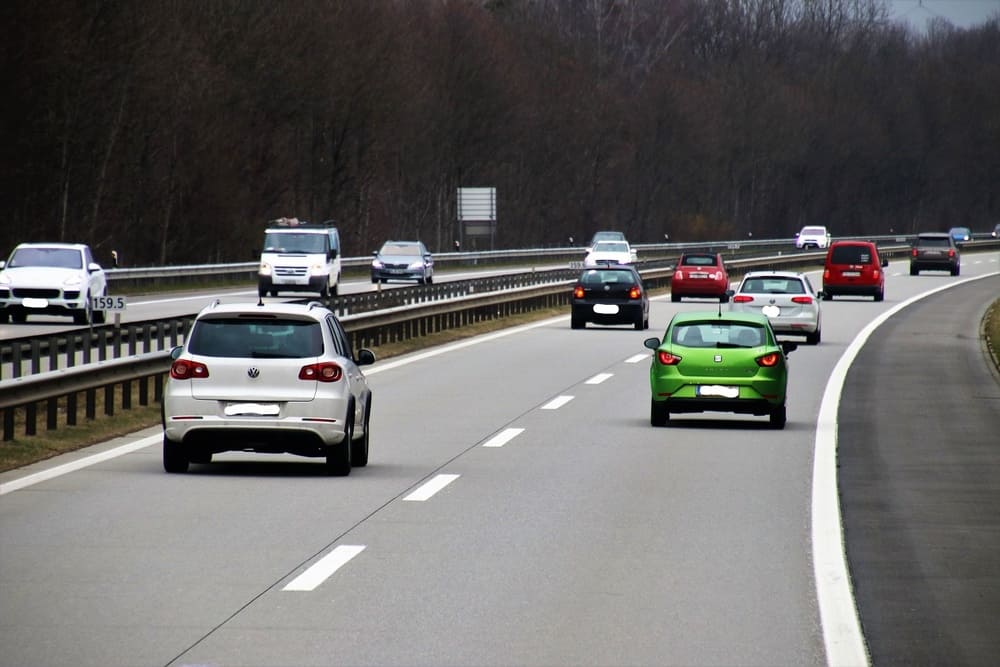
Overtaking on a highway must also be performed in accordance with traffic rules. The driver must ensure that the lane change is safe and does not create obstacles for other vehicles.
Overtaking a towed vehicle also requires attention. First, you must ensure that markings and signs do not prohibit this action. Second, you need to consider the increased length of the coupling and sufficient distance to complete the maneuver.
Particular care must be taken when performing double overtaking, that is, when another vehicle is also performing a maneuver. In this case, you must ensure that there is no vehicle on the side or behind that is passing or overtaking.
To thoroughly learn how to safely perform maneuvers, it is better to enroll in driver's courses. Experienced instructors will help you understand the rules and teach you to overtake other vehicles without risks.
Typical beginner mistakes
Due to insufficient experience, many novice drivers incorrectly assess the traffic situation and rush when performing a maneuver. Most often, mistakes are caused not even by the lane change itself, but by the inability to properly assess the speed, distance, and position of other vehicles. Among typical mistakes, the following situations can be noted:
- Starting a maneuver with insufficient visibility.
- Incorrect assessment of the speed of an oncoming vehicle or the time needed to complete the maneuver.
- Ignoring signs and markings that prohibit or restrict the maneuver.
- Performing overtaking in places where it is prohibited by traffic rules.
- Insufficient distance to the vehicle to be overtaken.
- Starting to overtake when another vehicle has already started a maneuver.
A separate danger is the mistaken belief that overtaking always involves entering the oncoming traffic lane. Current traffic rules associate overtaking with entering the adjacent lane and subsequently returning to it; however, such a maneuver can also be performed without entering the oncoming lane.
How to properly perform passing
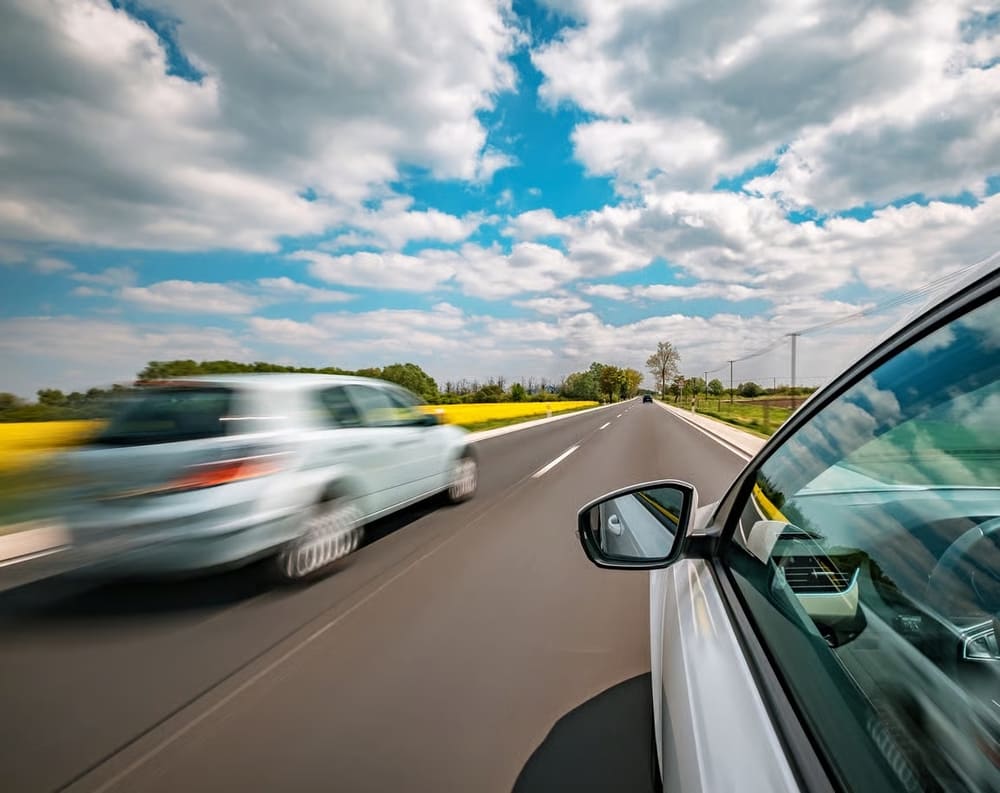
Passing is defined as the movement of a vehicle at a higher speed than a car moving in an adjacent lane. Unlike overtaking, this maneuver does not necessarily involve leaving the lane and returning to it.
The first thing a driver must do is ensure the safety of performing the pass. It is necessary to assess the situation on the road in front of and behind the vehicle, check the mirrors, and ensure that there are no other road users in the "blind spot". The driver must also turn on the turn signal in advance.
When performing a pass on the roadway, it is important to follow these rules:
- do not exceed the speed limit;
- maintain distance from other vehicles;
- do not make sudden lane changes;
- take into account signs and markings;
- do not create obstacles.
If changing lanes is necessary to perform a pass, the driver must strictly comply with the traffic rules that regulate such actions. It is important to note that even a free lane does not give the right to immediately move into it. You must first ensure that the maneuver is safe and then signal other drivers.
Particular care must be taken when passing in heavy traffic, where vehicles are moving at different speeds. In such situations, you must constantly monitor the distance and the position of other vehicles.
.jpg)
Fines for rule violations
Violation of overtaking rules and other maneuvering requirements may result in administrative liability under Part 2 of Article 122 of the Code of Ukraine on Administrative Offenses (CUoAO). The amount of the fine depends on the nature of the violation. If during a dangerous maneuver the driver created an emergency situation, liability is assigned according to Part 5 of Article 122 of the CUoAO, which provides not only a fine but also possible disqualification from driving for a period of 6 months to 1 year.
