


Parallel parking along the curb is one of the most important skills for a driver. It is tested during the driving exam, and it is a skill you will need very often, if not every day, in practice. Therefore, every driver needs to learn how to parallel park. It is not easy, as you have to simultaneously keep an eye on the steering wheel, mirrors, and pedals, while also having a good sense of the car's dimensions and avoiding creating an emergency situation. It may seem difficult to learn, but there are several tips that will help both those who are just learning to perform maneuvers and those who wish to improve their skills.
How parallel parking works
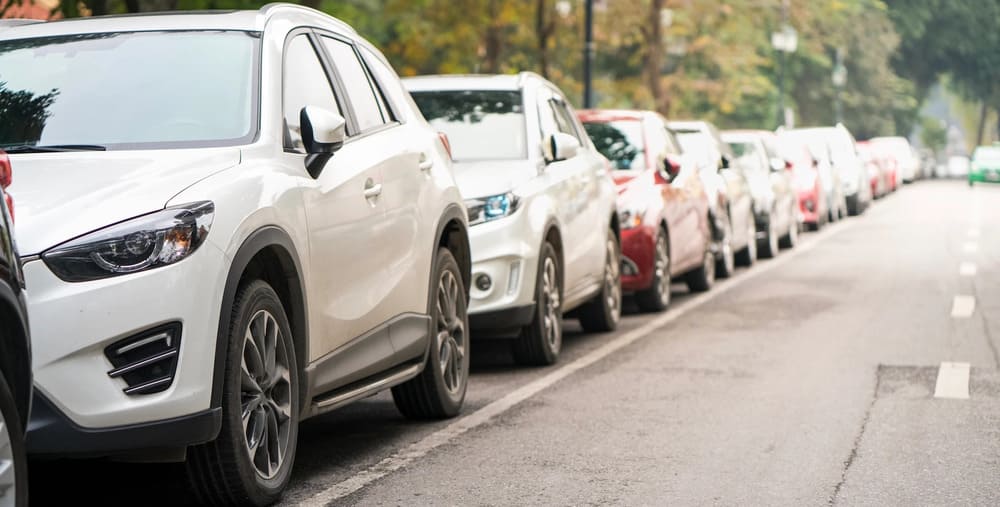
Parallel parking refers to parking between two cars that are parked along the curb, at the edge of the roadway or sidewalk. Most often, this maneuver is performed in reverse, as it is easier for the car to occupy a limited space this way. However, there are nuances that are important to understand, and to learn them, it is best to sign up for a practical driving course:
Vehicle movement trajectory
The rear wheels move closer to the inner part of the turn, while the front wheels, on the contrary, move along a wider trajectory.
Steering angle and its critical role
The more the steering wheel is turned, the sharper the car changes its direction of movement. This is not always necessary when parallel parking. The point at which you need to turn the wheel depends on the car's dimensions and the distance to other vehicles.
Safe clearance from the curb and neighboring cars
Before performing the maneuver, you need to assess whether there is actually enough space to park. Do not squeeze the car into a tight space, as this can lead to a collision.
The importance of mirrors
Mirrors provide convenient visibility and control of the car's position from all sides. It is impossible to achieve this effect just by turning your head backward.
Proper use of gas and clutch
In cars with a manual transmission (MT), you should move at a minimum speed, controlling it with the clutch and slightly pressing the gas. In cars with an automatic transmission (AT), you should control the movement by gently pressing the brake.
Parallel parking moving forward is more difficult, as it is hard to correctly calculate the distance from the front overhang, which is not visible, to the neighboring car. Because of this, it is not easy to determine the exact moment to start turning the steering wheel.
Step-by-step algorithm: start and reference points
To park parallel correctly, it is best to divide the entire process into sequential stages:
- Aligning your bumper parallel to the reference car.
- Determining the correct distance between the sides (safe lateral clearance).
- Engaging reverse gear and the moment of starting to move.
- The point of initially turning the steering wheel all the way.
- Using the viewing angle to find the target.
To master the maneuver perfectly, it is best to take a Category B driving course, where you are taught the basic driving skills.
How to maneuver in tight spaces
Parking in conditions with limited space requires skill and a detailed understanding of the car's dimensions from the driver. The main rules of parallel parking to keep in mind:
- noting the moment when you need to start turning the steering wheel in the opposite direction so that the rear wheel does not hit the curb;
- controlling the position of the rear wheel. At first, you should orient yourself using the mirrors, and over time, you will develop a natural sense of the car's dimensions;
- parallel position of the body. At the final stage, the car should be perfectly parallel to the sidewalk.
At the final stage, you need to straighten the wheels completely. They should be straight so that it is easier to calculate the moment to turn the steering wheel when exiting the parking spot.
.jpg)
5 most common parking mistakes
Not everyone gets parallel parking right on the first try. This is usually because drivers make typical mistakes when parking in reverse:
- Incorrect initial distance. If the car is too close to the reference car, the trajectory of the rear part will be different.
- Turning the steering wheel too early or too late.
- Jerky pedal work – this complicates the car's movement and control.
- Ignoring blind spots and the front overhang of the car.
- Panic after the first failure.
To get rid of these mistakes, practice is needed, and it is best under the guidance of an experienced driving instructor who will help identify the problems, analyze them, and explain how to perform the maneuvers correctly.
How to permanently get rid of the fear of tight courtyard parking
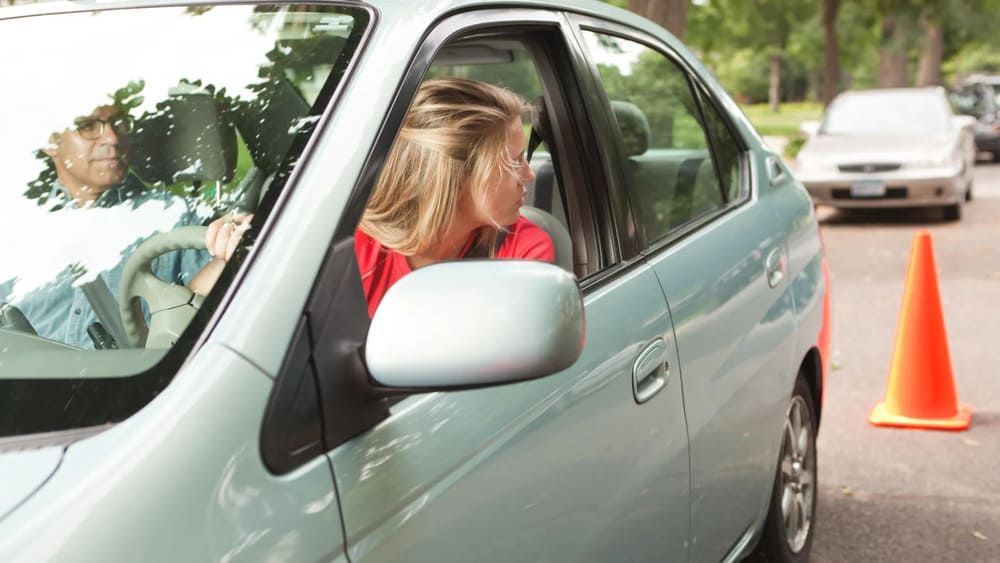
The fear of parking in a limited space is usually caused by a lack of practice. To acquire the skill of parking in tight spaces, you need to train. It is best to do this in safe, controlled areas. For training, you can use traffic cones, light markers, or even water bottles.
The second tip is not to be afraid to perform the maneuver again. If the trajectory is incorrect and the car is not at the right angle, it is better to pull out and try parking again. Do not pay attention to the honking of other drivers waiting for their turn. Safety is more important than the impression you make on other people, who, by the way, also once had no experience and were learning.
Instructors' tips for proper parking
Several tips from experienced instructors will help you learn to perform the maneuver correctly:
- Find individual reference points through the car windows – these could be the pillars, door handles, mirrors, or the position of the rear wheels.
- Before parking, always adjust the right mirror slightly lower to improve the visibility of the rear wheel.
- Practice on a training course with cones to develop the skill.
- Do not make sharp steering movements, as this quickly changes the trajectory and causes the driver to lose control of the process.
- Do not give up and keep practicing; confidence and mastery come with experience.
Overall, to learn to perform maneuvers safely, it is best to sign up for driving courses in Lviv. During the lessons, students learn how to park correctly using mirrors, determine distance and the steering turning point, as well as other important nuances. An important part of the training is practice with a driving instructor: the specialist helps to immediately notice and analyze mistakes, making it possible to eliminate them.
