


Obtaining a driver's license is the final stage of training, which indicates readiness and the ability to safely drive a car in real road conditions. However, to get it, you must successfully pass the practical exam. How to pass the practical exam on the first try? This is a question that worries every future driver, and this is exactly what we will discuss right now.
What skills will help you pass the exam
How to pass the exam? First of all, you need to study the theory and complete driving practice. The following skills are important:
Starting to move
Practical driving requires the driver to follow a clear algorithm of actions:
- adjust the seat;
- adjust the mirrors;
- fasten the seat belt;
- start the engine;
- turn on the turn signal;
- start moving, having previously assessed the road situation.
If a candidate misses even one of these stages during the exam, the examiner will take note of it.
Parking
Usually, parking skills are evaluated using different methods:
- parallel parking;
- perpendicular parking;
- reverse parking.
During the exercises, it is important to know how to use the mirrors and control the car's speed.
U-turn
A practical course in driving helps to develop the necessary skills:
- performing a U-turn only in permitted areas;
- using mirrors;
- assessing the road situation before starting the maneuver.
The examiner also evaluates how safe the driver's actions were.
Driving through intersections
You need to correctly determine the right of way at different types of intersections:
- regulated;
- unregulated;
- roundabouts;
- right of way.
During the exam, the correct passage through these intersections, the ability to navigate by traffic lights, take into account road signs, and the safety of the exercise execution are evaluated.
Reversing
It is worth learning to navigate using mirrors, and during the exam, drive slowly and move only after fully controlling the situation behind the car.
Maneuvering
During the exam, the inspector takes into account:
- the smoothness of maneuver execution;
- the safety of the chosen speed;
- the ability to assess the road situation.
Sudden acceleration or unjustified braking can cause you to fail the practical driving exam.
Most common mistakes during the driving test
Failed attempts to pass the exam are most often associated with inattention or nervousness, which lead to mistakes. If you know them, it will be easier to avoid them.
The candidate did not look in the mirrors to assess the road situation. If this is not done, the examiner will consider the actions dangerous.
Did not turn on the turn signal. Signals warn other drivers of the intention to perform a maneuver.
Speeding. The driver must control the speed in accordance with road signs and driving conditions.
Driving too slowly. Unjustifiably slow driving is also considered a mistake, as it creates obstacles.
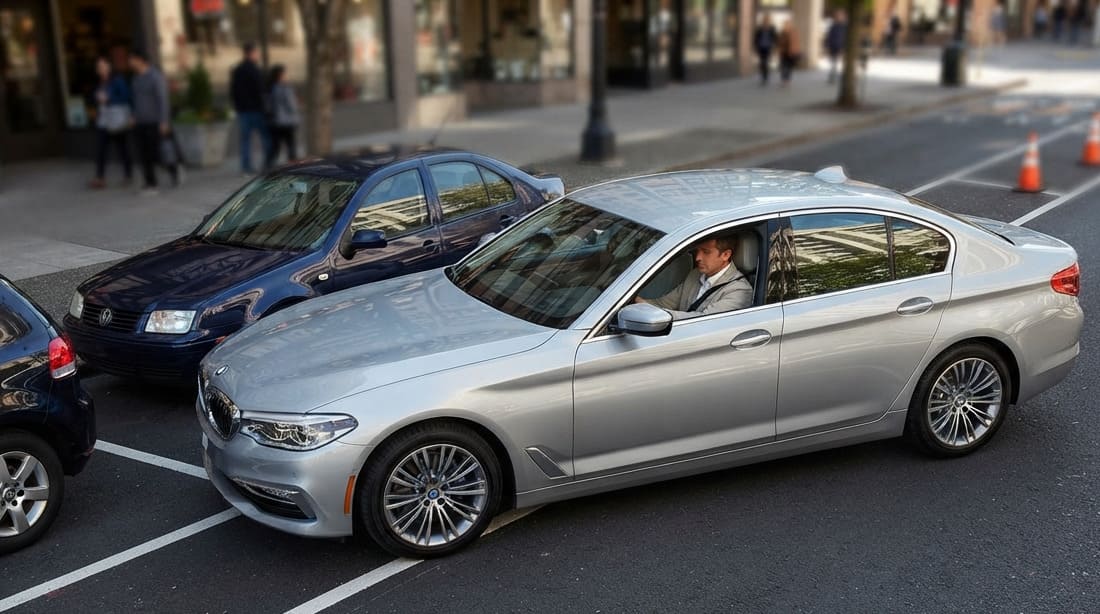
Incorrect parking. When performing the exercise, it is important to correctly assess the distance to other cars and stay within the boundaries of the parking space.
Failure to yield to a pedestrian. If the candidate does not yield to them in cases where pedestrians have the right of way, this is a gross violation.
Violation of priority. Incorrect determination of the right of way at intersections or when exiting a minor road creates an emergency situation. This is taught in the theory course.
Sudden braking. This action indicates an incorrect assessment of the road situation or uncertain car control.
Engine stall. It is important to calmly resume movement without panic and not create obstacles for other road users.
Incorrect gear shifting. This can lead to a loss of control over the car or engine stalling.
Incorrect start on an incline. When starting on an incline, the car should not roll backward. The driver must correctly use the clutch, gas pedal, and, if necessary, the parking brake.
Failure to control the road situation. City driving requires monitoring road signs, traffic lights, pedestrians, vehicles, and the ability to predict possible changes in the road situation.
How to psychologically prepare for the exam
Nervousness is a natural reaction, so most candidates face it. To reduce stress, you need to prepare well in advance and focus while behind the wheel. Also, the day before the exam, you should get a good night's sleep – go to bed on time to get 7-9 hours of sleep.
Also, do not rush. Haste often leads to mistakes and loss of concentration. Among the tips on how to pass the exam on the first try, it is also worth noting the need to listen carefully to the examiner to correctly understand the task and avoid making mistakes.
If a minor mistake occurs, you should try to remain calm and focused to avoid making more mistakes.
15 tips from instructors to help you successfully pass the exam
Experienced instructors advise paying attention not only to driving technique but also to proper behavior during the exam. Tips from the Ministry of Internal Affairs will help you pass the practical exam:
- Arrive at the exam early.
- Do not rush.
- Listen carefully to the instructions.
- Always look in the mirrors.
- Do not be afraid to take a pause.
- Look far ahead.
- Do not focus only on the gear shift.
- Do not look only under the wheels.
- Control your speed.
- Do not argue with the examiner.
- Keep a safe distance.
- Use turn signals.
- Do not panic over minor mistakes.
- Before the exam, take an additional lesson and drive the practical exam routes.
- Treat the driving exam like a regular trip.
These tips help to form correct behavior behind the wheel and reduce the number of mistakes during the exam.
.jpg)
What to do if you failed the exam?
Not everyone manages to pass the Category B practical exam on the first try. In this case, you need to carefully analyze the mistakes made, take additional practical driving lessons, and practice problematic maneuvers.
Retaking the practical exam is carried out within the timeframes established by the Ministry of Internal Affairs. High-quality preparation, sufficient practice, and confidence behind the wheel significantly increase the chances of successfully passing the practical exam.
