


There are many different indicators on the dashboard of cars. They monitor the operation of the machine, the condition of its components, and systems. In case a problem arises somewhere, it is the sensors that are the first to signal it. If you know what the indicators on the dashboard mean, you can react in time and prevent serious breakdowns or emergency situations.
How the car's self-diagnosis system works
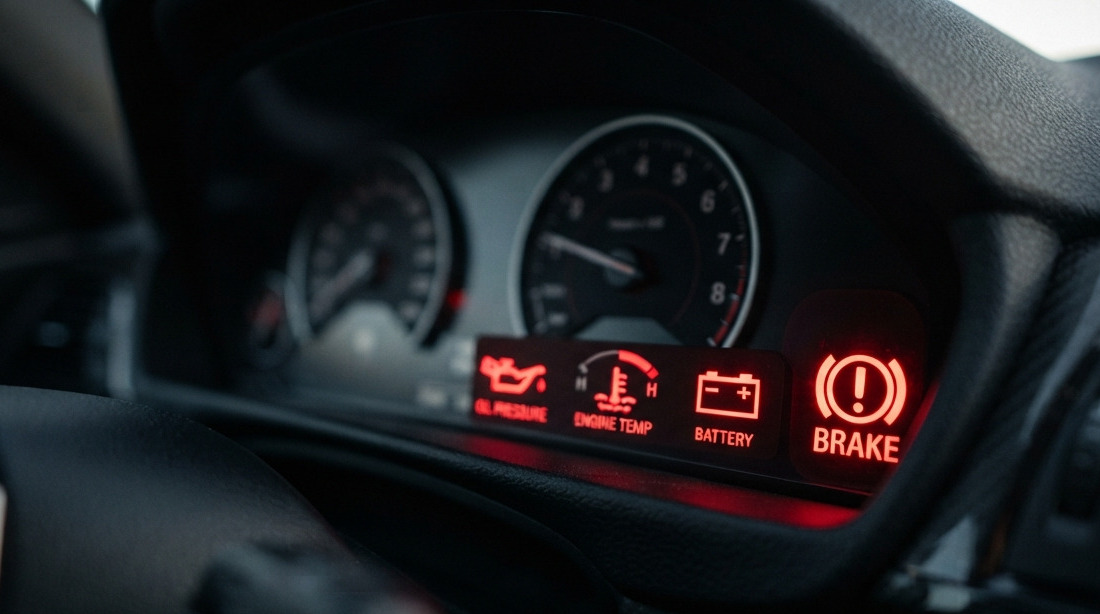
Almost all modern cars are equipped with electronics to monitor their technical condition. After turning on the ignition, the electronic control unit checks the operation of the engine, braking system, sensors, and other components. At this moment, the indicators on the car's dashboard light up briefly, which is a normal checking process.
If, after starting the engine, a specific indicator remains lit or lights up while driving, it means the system has detected a malfunction or deviation in operation.
What indicator colors mean
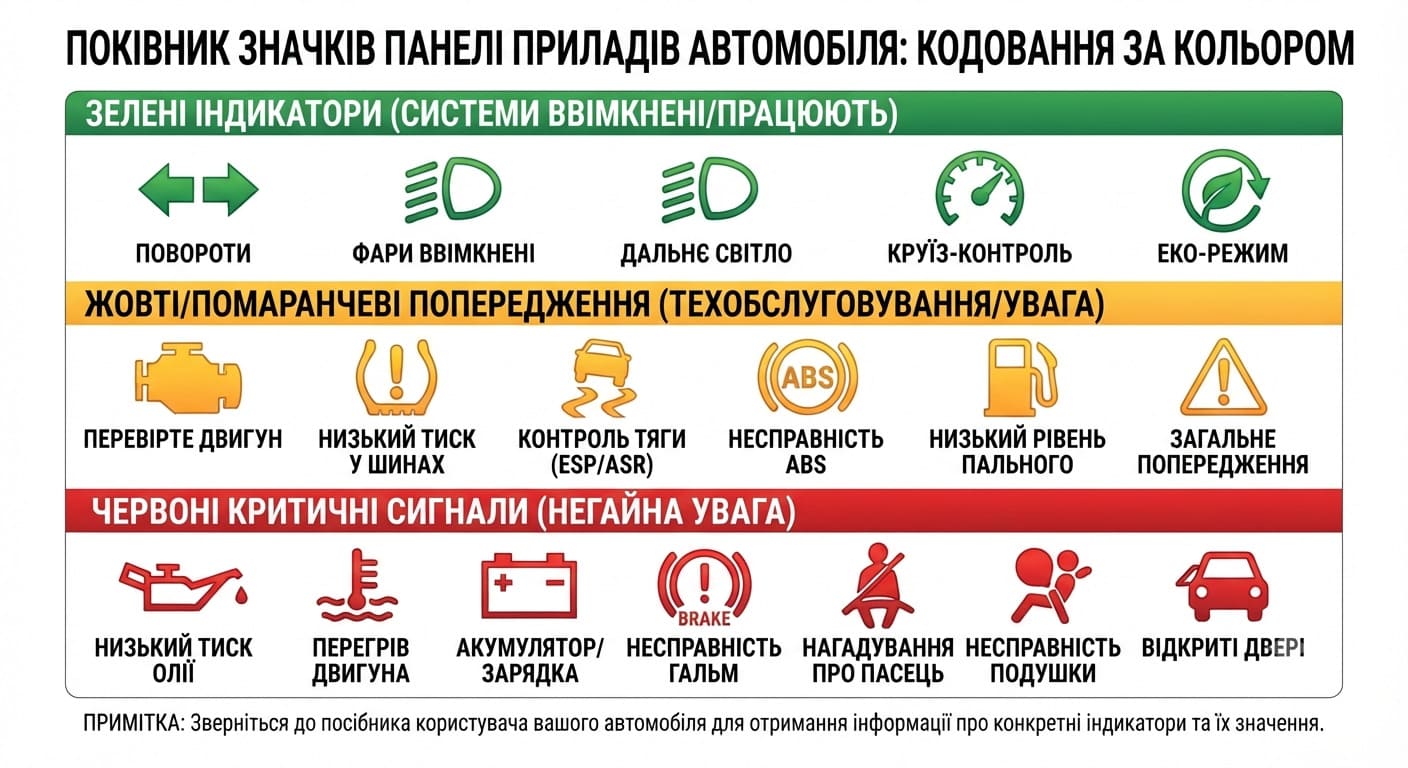
By level of importance, they are classified by different colors: red, blue, yellow, and green. The Theory course also covers this classification as part of its program. Each color type of sensor has a specific purpose:
Green indicators
Green icons indicate that a specific car function is operating in normal mode.
These indicators include:
- turn signals;
- low beam headlights, fog lights;
- cruise control;
- automatic speed maintenance system.
Green indicators only turn on when the corresponding system is in active mode.
Blue indicators
Blue indicators are used less frequently. Most often, they signal that the high beam headlights are turned on.
Yellow or orange indicators
These are warning sensors. They indicate the occurrence of errors. The car is notifying you that one of the systems is not working correctly.
In most cases, you can continue driving if the car behaves normally and there are no unusual noises or signs of a serious malfunction. However, you should not ignore such messages - it is advisable to visit a service station as soon as possible.
Red indicators
Red icons on the dashboard are the most critical. They signal a dangerous malfunction or a critical condition of one of the car's components.
When a red light illuminates on the dashboard, you must stop immediately and either call a tow truck or try to solve the problem on your own.
The most important indicators every driver should know
Dozens of different symbols can be displayed on the dashboard, but there are specific ones that are of particular importance and crucial for the safe operation of the vehicle. Knowing the meaning of the icons on the dashboard, a driver can quickly assess the situation, avoid serious breakdowns, and seek service in a timely manner:
Check Engine
The Check Engine indicator points to malfunctions in the engine or in one of the electronic components associated with it. This is one of the most important sensors. To better understand what Check Engine means, you should listen to the car and pay attention to the engine's behavior. If it is running stably, you can continue driving very carefully, preferably straight to a service station.
Engine oil pressure indicator
Indicates insufficient engine oil pressure in the lubrication system. Continuing to drive with this signal on can lead to serious engine damage, so the vehicle must be safely stopped and the oil level checked.
Engine temperature indicator
Warns of engine overheating. The reasons why the engine temperature indicator lights up vary: lack of coolant; fan malfunction; cooling system problems. If the icon lights up while driving, the engine should be stopped and allowed to cool down.
Battery light
May indicate a malfunction of the alternator, battery, or charging system. After the battery is completely drained, the car may stall, so the problem should be resolved as quickly as possible.
Brake system indicator
Warns of possible system malfunctions or low brake fluid level. Since brake malfunctions directly affect driving safety, the vehicle must be checked before continuing the trip.
Parking brake
The indicator usually lights up when the parking brake is engaged. If the light does not go out after it is released, it may indicate a brake system malfunction or low brake fluid level.
.jpg)
ABS
The ABS system indicator reports a malfunction in the anti-lock braking system. In this case, the brakes still work, but during emergency braking, the wheels may lock up, which worsens vehicle control.
ESP (Electronic Stability Program)
Indicates the operation or malfunction of the electronic stability control system. If the ESP sensor blinks at short intervals, it indicates that the system is actively helping to maintain vehicle stability. If it stays lit continuously, diagnostics are required.
TPMS (Tire Pressure Monitoring System)
If the tire pressure indicator lights up, it indicates a drop in pressure in one or several tires at once. Insufficient pressure worsens handling, increases fuel consumption, and accelerates tire wear.
Airbag
The airbag indicator points to a possible malfunction in the Airbag system or one of its sensors. That is, in the event of an accident, the airbags may not deploy or may deploy incorrectly, so it is advisable not to delay visiting a service center.
Unfastened seat belt
Indicates the need to fasten the seat belt. In many cars, the signal is accompanied by an audible warning and will not turn off until the belt is fastened.
Low fuel level
Indicates that the fuel reserve is approaching the minimum. After it appears, it is advisable to refuel the car as soon as possible.
What to do if a malfunction indicator lights up
The appearance of a warning indicator does not always mean a serious breakdown. Stay calm and assess the car's behavior. Follow a few tips:
- do not panic;
- assess whether the car's operation has changed;
- check the onboard computer messages;
- pay attention to the color of the indicator;
- if necessary, stop safely;
- visit a service station for diagnostics.
If a yellow indicator is lit and the car is operating without significant deviations, you can carefully continue driving to a service station. However, if a red light is on, it is recommended to stop the vehicle immediately and only continue driving after the malfunction has been fixed.

How to prevent warning indicators from appearing
Most dashboard sensors light up due to untimely maintenance or insufficient monitoring of the vehicle's technical condition. Simple car care rules will help reduce the risk of warning signals appearing:
- regular maintenance;
- monitoring engine oil level;
- checking coolant level;
- monitoring the condition of the battery and charging system;
- maintaining recommended tire pressure;
- timely computer diagnostics of the vehicle.
However, even when no icons appear on the car's dashboard, you still should not delay preventive maintenance. Regular car care increases driving safety, helps avoid malfunctions, and prevents unnecessary repair costs.
